Tuesday, January 24, 2012

Efficacy and Safety of Anticoagulant Treatment in Acute Cardioembolic Stroke

Abstract

Background and Purpose— The role of anticoagulant treatment for acute cardioembolic stroke is uncertain. We performed an updated meta-analysis of all randomized trials to obtain the best estimates of the efficacy and safety of anticoagulants for the initial treatment of acute cardioembolic stroke.
Methods— Using electronic and manual searches of the literature, we identified randomized trials comparing anticoagulants (unfractionated heparin or low-molecular-weight heparin or heparinoids), started within 48 hours, with other treatments (aspirin or placebo) in patients with acute ischemic cardioembolic stroke. Two reviewers independently selected studies and extracted data on study design, quality, and clinical outcomes, including death or disability, all strokes, recurrent ischemic stroke, and cerebral symptomatic bleeding. Odds ratios for individual outcomes were calculated for each trial and data from all the trials were pooled using the Mantel-Haenszel method.
Results— Seven trials, involving 4624 patients with acute cardioembolic stroke, met the criteria for inclusion. Compared with other treatments, anticoagulants were associated with a nonsignificant reduction in recurrent ischemic stroke within 7 to 14 days (3.0% versus 4.9%, odds ratio 0.68, 95% CI: 0.44 to 1.06, P=0.09, number needed to treat=53), a significant increase in symptomatic intracranial bleeding (2.5% versus 0.7%, odds ratio 2.89; 95% CI: 1.19 to 7.01, P=0.02, number needed to harm=55), and a similar rate of death or disability at final follow up (73.5% versus 73.8%, odds ratio 1.01; 95% CI: 0.82 to 1.24, P=0.9).
Conclusions— Our findings indicate that in patients with acute cardioembolic stroke, early anticoagulation is associated with a nonsignificant reduction in recurrence of ischemic stroke, no substantial reduction in death and disability, and an increased intracranial bleeding.


http://stroke.ahajournals.org/content/38/2/423

Friday, January 20, 2012

The Clinical Management of Gastroesophageal Varices: Summary

Esophageal varices develop in 5%-10% of patients with cirrhosis annually. Esophageal varices are more likely to bleed than gastric varices, although gastric variceal hemorrhage may be more severe. All patients with cirrhosis should be screened for gastroesophageal varices, and patients with medium-to-large varices should receive prophylaxis with beta-blockers to reduce the risk for bleeding. In patients who are intolerant to or who have contraindications to beta-blockers, band ligation of esophageal varices is effective in reducing the risk for esophageal hemorrhage. Once variceal hemorrhage occurs, band ligation of esophageal varices or cyanoacrylate injection of gastric varices can be used. For poorly controlled patients with continuing bleeding, placement of a TIPS or surgical shunt may be required.

Key Points
  1. All patients with compensated cirrhosis should be screened for gastroesophageal varices every 2 years.
  2. Upper endoscopy is the screening method of choice.
  3. Patients with decompensated cirrhosis should have more frequent endoscopic screening.
  4. Patients with esophageal varices > 5 mm in diameter should receive noncardioselective beta-blocker prophylaxis with propranolol, nadolol, or carvedilol.
  5. For those intolerant to or with contraindications for beta-blockers, obliteration of esophageal varices with band ligation is an alternative method of prophylaxis.

Key Points
  1. All patients with compensated cirrhosis should be screened for gastroesophageal varices every 2 years.
  2. Upper endoscopy is the screening method of choice.
  3. Patients with decompensated cirrhosis should have more frequent endoscopic screening.
  4. Patients with esophageal varices > 5 mm in diameter should receive noncardioselective beta-blocker prophylaxis with propranolol, nadolol, or carvedilol.
  5. For those intolerant to or with contraindications for beta-blockers, obliteration of esophageal varices with band ligation is an alternative method of prophylaxis.


Preferred examination

Endoscopy is the criterion standard for evaluating esophageal varices and assessing the bleeding risk.[1, 2, 5, 9, 10] This procedure is performed by a surgeon or a gastroenterologist with the patient under light sedation. The procedure involves using a flexible endoscope inserted into the patient's mouth and through the esophagus to inspect the mucosal surface.
When esophageal varices are discovered, they are graded according to their size, as follows:
  • Grade 1 – Small, straight esophageal varices
  • Grade 2 – Enlarged, tortuous esophageal varices occupying less than one third of the lumen
  • Grade 3 – Large, coil-shaped esophageal varices occupying more than one third of the lumen
The esophageal varices are also inspected for red wheals, which are dilated intra-epithelial veins under tension and which carry a significant risk for bleeding. The grading of esophageal varices and identification of red wheals by endoscopy predict a patient's bleeding risk, on which treatment is based.

The Clinical Management of Gastroesophageal Varices: Therapy of Acute Variceal Hemorrhage

Patients who develop variceal hemorrhage should be transfused to maintain systemic blood pressure at 100 mm Hg and hemoglobin at ≥ 8 gm/dL.Patients with coronary artery disease may need transfusion to higher hemoglobin levels. It is important to not overtransfuse. The patient's airway should be controlled as necessary and antibiotics administered. Antibiotics can reduce the risk for systemic infection, renal failure, rebleeding, and death. Octreotide, a somatostatin analogue, is administered as soon as suspected variceal hemorrhage is identified. This off-label use of octreotide has an uncertain mechanism of action but appears effective in reducing or stopping variceal bleeding. Once initiated, octreotide should be maintained for 2 to 5 days.Vasopressin, a posterior pituitary hormone, is a potent vasoconstrictor that will also reduce portal pressure. It also increases systemic vasoconstriction and has been associated with myocardial infarction and small bowel necrosis.Terlipressin, a long-acting analogue of vasopressin, can reduce mortality from variceal hemorrhage but is not available in the United States.
Balloon tamponade with a Linton-Nachlas or Sengstaken-Blakemore tube can be a bridge to endoscopic therapy in massive variceal hemorrhage. Care should be taken to prevent insufflation of the gastric balloon within the esophagus and an immediate radiograph centered on the xiphoid should be obtained to ensure that placement is correct. Balloon tamponade is 90% effective in stopping bleeding, although about one half of patients will relapse with bleeding when the balloon is released in 24 to 72 hours.
Urgent endoscopy should typically be completed within 12 hours of bleeding. Band ligation is preferred for control of bleeding and is considered the treatment of choice.Side effects include initial dysphagia, esophageal ulceration, and esophageal perforation (rare). Risk for banding-induced ulceration can be reduced by addition of a proton-pump inhibitor. Banding should be repeated until obliteration of varices is complete. Addition of a beta-blocker is useful in secondary prophylaxis. Sclerotherapy of esophageal varices is inferior to band ligation.[35]
Uncontrolled bleeding, defined as continued bleeding at 24 hours, is uncommon when band ligation and octreotide are used. If bleeding continues, repeat banding or placement of TIPS, or surgical shunting should be considered. TIPS placement involves creating an intrahepatic shunt between the portal vein and hepatic vein using a covered stent. This is effectively a side-to-side portosystemic shunt, and, although rebleeding rates are low, hepatic encephalopathy is frequent. Progressive occlusion of the shunt can develop, and hepatic ultrasound should be repeated every 4-6 months to ensure patency.
Gastric varices may be associated with severe bleeding. Gastric banding is associated with significant rebleeding due to gastric ulceration when the band sloughs. The use of detachable snares may be more effective, and is under study. Often, bleeding patients with uncontrolled gastric varices are treated with a surgical shunt or TIPS. Intravariceal injection of polymer (N-butyl-2-cyanoacrylate) can occlude gastric varices but is not available in the United States. Off-label use of 2-octyl cyanoacrylate, which is available in the United States, appears to be more effective than band ligation for gastric varices. Complete obliteration of gastric varices requires repetitive injections and can be supplemented with endoscopic ultrasound to ensure adequate treatment.

The Clinical Management of Gastroesophageal Varices: Primary Prophylaxis for Variceal Hemorrhage

For patients with medium-to-large esophageal varices (> 5 mm in diameter), nonselective beta-blocker prophylaxis will reduce the risk for bleeding.Although beta-blocker therapy will not prevent varices from forming, it can reduce the likelihood of gastrointestinal hemorrhage by 40%  through a reduction of portal pressure flow from reduced splanchnic arterial vasodilation and cardiac output. Nonselective beta-blockers such as propranolol, nadolol, or carvedilol should be used. Side effects including fatigue, dyspnea, lightheadedness, and bradycardia can develop. Carvedilol has been directly compared with band ligation, and achieved a lower rate of first bleed. No difference in bleeding-related or overall mortality was observed. The goal of beta-blocker therapy is a reduction of pulse rate by 25% or a rate of 55 beats per minute. Potential contraindications to beta-blocker therapy include asthma, heart block, obstructive pulmonary disease, aortic outflow tract disorders, or resulting severe side effects. Beta-blocker therapy should be continued indefinitely because the risk for bleeding is increased when the drug is stopped. Up to one third of patients may not achieve sufficient reduction of portal pressure to prevent bleeding. Varices < 5 mm in diameter with red wale signs in patients with decompensated cirrhosis may also benefit from beta-blocker therapy. Addition of isosorbide has been studied, but the data are insufficient to recommend its use with beta-blockers.
Band ligation of esophageal varices at upper endoscopy for moderate-to-large esophageal varices will also reduce the likelihood of first bleeding.  Meta-analyses suggest that banding is either more effective or equally effective as beta-blockers. Although banding has a reduced daily side effect profile when compared with beta-blockers, some complications can be severe, including bleeding from superficial ulceration or esophageal perforation. For that reason, initial therapy should be with beta-blockers reserving primary use of band ligation for those with contraindications or intolerance to beta-blockers.The simultaneous use of band ligation and beta-blockers for primary prophylaxis is unnecessary.
Gastric varices tend to have a lower risk for bleeding than esophageal varices, although bleeding can be more severe. Varices in the fundus of the stomach are more likely to bleed then varices at other gastric locations. Beta-blocker therapy should be used as primary prophylaxis for gastric varices. Intravariceal injection of glue (cyanoacrylate) as primary prophylaxis does not lead to a greater reduction of subsequent mortality than beta-blockers.
Sclerotherapy of esophageal varices is not recommended for primary prophylaxis due to the frequency of associated complications.Surgical shunts or TIPS are not recommended due to operative mortality and/or the development of postprocedure hepatic encephalopathy.

The Clinical Management of Gastroesophageal Varices: Screening for Varices

Screening for Varices

The presence of portal hypertension is defined by a portal venous pressure of greater than 10 mm Hg. The practice guideline from the American College of Gastroenterology (ACG) and the American Association for the Study of Liver Disease (AASLD) for gastroesophageal varices suggests that all patients with hepatic cirrhosis should be screened for varices at least every other year.Of those screened following a diagnosis of cirrhosis, approximately 50% will have gastroesophageal varices and roughly one third will have varices sufficiently large to require prophylaxis. Screening at endoscopy should determine the size of esophageal varices because patients with varices ≥ 5 mm in diameter are at the greatest risk for bleeding and should receive prophylaxis. Red wales are also an indicator of bleeding risk. Even varices that are < 5 mm in diameter with red wales are more likely to bleed and should receive drug prophylaxis.
Endoscopy remains the best screening method for gastroesophageal varices in patients with known or suspected cirrhosis. If initial screening endoscopy fails to identify varices, upper endoscopy should be repeated at 2 yearly intervals. For those with decompensated cirrhosis, more frequent screening endoscopy may be warranted. Wedged hepatic vein pressure measurement is the best predictor of varix development, and those with pressures > 20 mm Hg have the highest risk for hemorrhage.[Noninvasive techniques to look for significant portal hypertension or varices are of limited value.Thrombocytopenia, splenomegaly,and liver function tests can all be abnormal in the absence of esophageal varices. Estimates of liver stiffness using tissue elastography assist in identifying cirrhosis but are limited in their ability to identify significant portal hypertension.Capsule endoscopy with a dual camera capsule has been tested in patients who have had both capsule endoscopy and esophagogastroduodenoscopy on the same day.The sensitivity was 76% and specificity 82% for esophageal varices with capsule endoscopy, as compared with conventional endoscopy. Computed tomography is 65%-100 % sensitive and 50%-100% specific for large esophageal varices.Other noninvasive markers such as the Model for End-Stage Liver Disease (MELD), Child-Pugh score, and aspartate aminotransferase (AST) to platelet count index appear to lack sufficient sensitivity to screen for high-risk varices.
Clinical factors associated with variceal hemorrhage have been studied in 240 patients with bleeding varices and compared with 240 nonbleeding patients matched for cirrhosis and degree of decompensation. Constipation, vomiting, severe coughing, and excessive ethanol consumption all were associated with the risk of variceal hemorrhage.

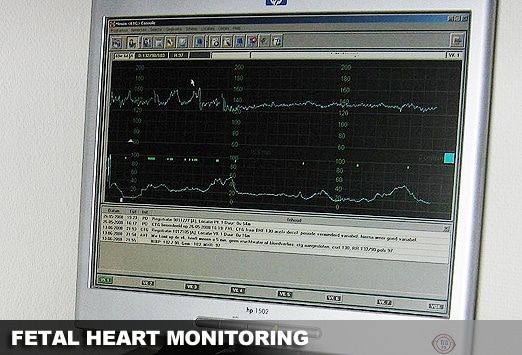
Fetal heart monitoring

ATLS的起源